


Written by Gabriella Kearns, Senior Fellow of Civic Storytelling at Braver Angels.
Wilk Wilkinson knew how to rile people up from a young age.
Growing up in the eighties, his family moved all around the Midwest as his parents chased down steady, blue-collar work: factory jobs, construction, truck driving, whatever could pay the bills. “We were always poor,” Wilk said. And whether they were in Iowa, South Dakota, Colorado, or Minnesota, he often found himself on the outs. “It didn’t matter which side of the tracks we were on,” he said. “It was always the wrong side of the tracks.”
By middle school, he got sick of being bullied and instead started to own his identity as an outsider, so he had his aunt make him a shirt with “dirtball” sprawled across the front in glitter paint. “I wore it to school one day, and then I got so much grief for it that I started wearing it as my gym shirt every day,” he said.
Trolling came naturally to Wilk decades before it was the norm on social media. “I would wear that shirt just to get a rise out of people,” he said. “I wanted to show them that I didn’t care if they called me a dirtball or a redneck.” This, in turn, won him a devoted following of fellow misfits, who came up with their own name for him: “Mr. President.”
“I wanted to show them that I didn’t care if
they called me a dirtball or a redneck.”
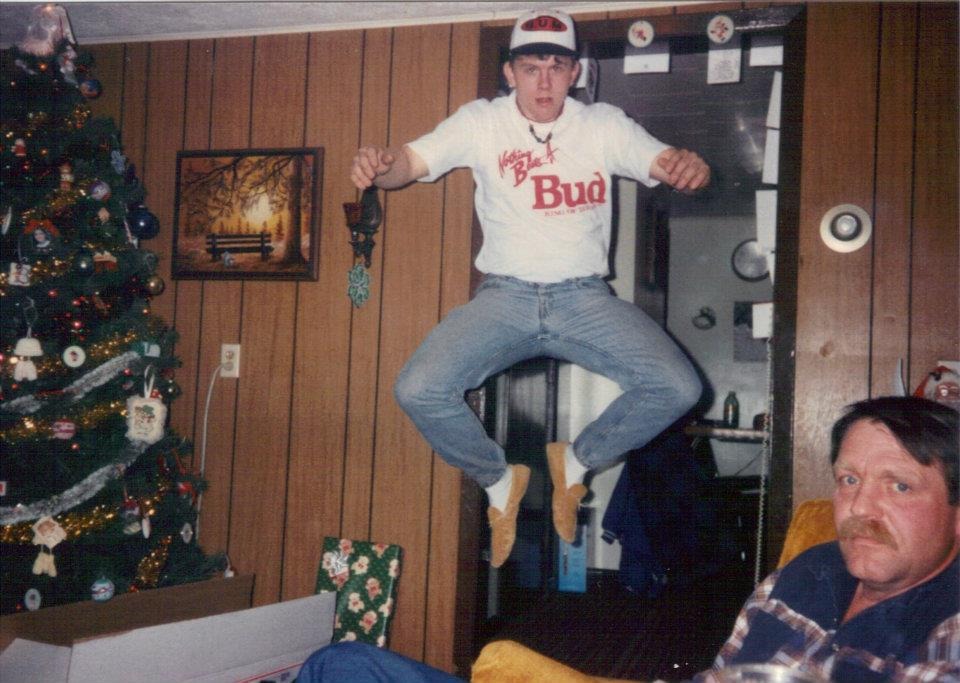
As president of the dirtballs, Wilk could often be found skipping school and getting into fights, and by the time he was a young man, he had punched—and been punched by—more people than he could remember. After dropping out of college, he had a string of jobs in restaurants and working construction. “Somewhere around 1996 I kind of ran out of money and ran out of options,” he said. “So I decided to join the service and went into the Navy.”
Still, he continued down the same path. “For the longest time, I would do stuff just to see if I’d live through it,” he said. Walking through dangerous parts of town, talking back to police officers, and of course, getting into fights with friends and strangers alike, Wilk was constantly pushing the boundaries, but it came at a cost: his relationships. “At some point, people wise up, and they just don’t want to hang around anymore,” he said.
But it wasn’t just other people reaching their limits—Wilk himself had had enough. “Eventually I got sick of just being miserable and being angry, of just being somebody who I didn’t want to be,” he said. During this time, his dad had his second quadruple bypass surgery, and his mom had several strokes. “Both my folks were in a very bad way,” he said. “So I sold pretty much everything I had, and left my life behind to help take care of them.”
“I got sick of just being miserable and being angry,
of just being somebody who I didn’t want to be.”
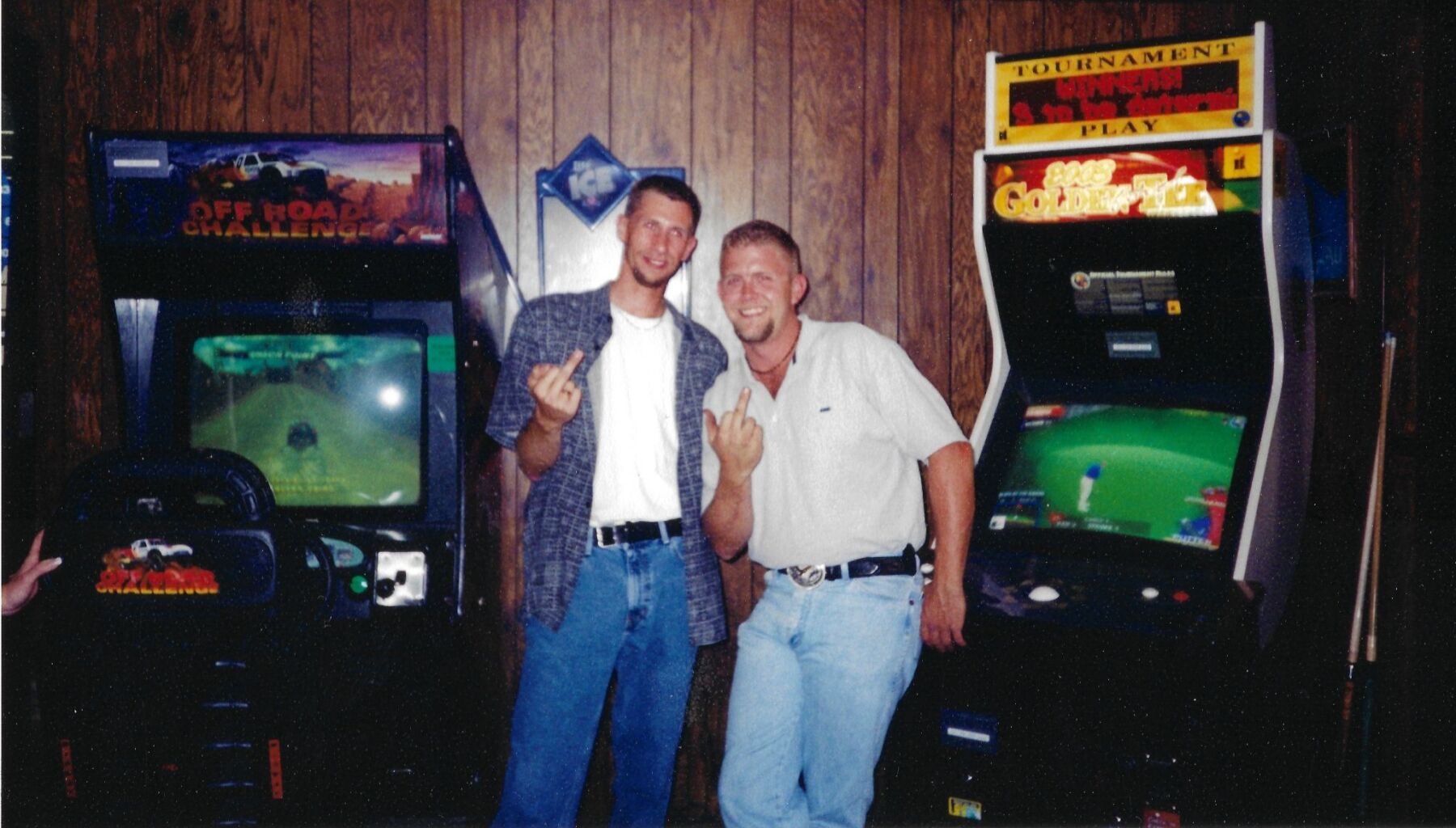
He didn’t plan on staying long. “The idea was just to kind of help them get back on their feet, and then I was going to take off and go do something else,” Wilk said. But months after he arrived, his dad passed away, and his mom couldn’t live on her own. “God had other plans,” he said.
By this time, Wilk was in his mid-thirties and reevaluating what he wanted out of life. So, he took a break from bad relationships and began digging into books like The 7 Habits of Highly Effective People, How to Win Friends and Influence People, and eventually, the most influential of them all: Man’s Search for Meaning.
“[Viktor Frankl] was talking about losing his wife, his daughter, his life’s work, and everything he had ever owned,” Wilk said. “He was being tortured by his captors. They could do everything to his body, but the one thing they couldn’t take away was how he was going to respond.”
Reading this changed everything for Wilk. “It hit me like a sledgehammer,” he said. “I started to think about all the ugly things that I’d experienced over the course of my life, and how I had responded to them. In many, if not most cases, I responded poorly. I had the ability to choose my response, and I chose wrong.”
But that was all in the past, and he knew now all he could do was change his future. “When I started living that way, life got exponentially better,” he said. Wilk bought a home in 2014, met his wife in 2015, got married in 2018, and had his daughter at the end of 2019. But in 2020, his life took another turn when the pandemic hit. “The last part of my mindset journey was finding my way to Braver Angels,” he said.
“The last part of my mindset journey was
finding my way to Braver Angels.”

For much of his life, Wilk didn’t pay attention to politics, but he became more engaged following 9/11, when he heard people blame the terrorist attack on American imperialism and the Bush administration. “It just did not sit well with me at all,” he said. “I started listening to a lot more political talk radio, which I’d never really listened to before, and just became more and more polarized over the eight years of Barack Obama.”
During the 2016 election, he had a hard time stomaching President Trump, but held his nose and voted for him anyway, believing both candidates would be bad for the country. “I just thought this ‘make libs cry’ kind of governing—which is now on steroids—was a bad way of doing things,” he said. “But I did agree with a lot of his policy positions.”
By 2020, he ran a T-shirt company called FU Apparel, directing people to FailedUnderstandingApparel.com, a website about how liberals don’t understand the Constitution. “The idea that I was going to change anybody’s mind by saying FU just didn’t work,” he said.
He had also started his podcast, Derate the Hate, around this time. At first “it wasn’t super political,” he said. “It was mostly about mindset.” But as COVID-19 ramped up, Wilk started speaking out against the government’s decisions.
“The idea that I was going to change anybody’s mind
by saying FU just didn’t work.”
By 2021, two Minnesota-based Braver Angels volunteers—Rick Hotchner and Barbara Thomas—found Wilk’s podcast and invited him to be a part of the organization. “All of a sudden I’m this blue-collar conservative with a big mouth at Braver Angels,” he said. More and more fellow volunteers began reaching out, asking what he thought about the government’s response to the pandemic. Then, in early 2022, he was invited to a meeting with two of the Braver Angels cofounders: David Blankenhorn and David Lapp.
“David Blankenhorn was like, ‘I want to ask you if you’ll do something, and it’s going to be way out of your wheelhouse in terms of what you normally do,’” Wilk said. David then told Wilk he had the opportunity to work alongside Dr. Francis Collins—the former head of the NIH and one of the most influential leaders on COVID policy—on a project about how the public health community can work to restore trust with everyday Americans. “I said, ‘Hell yeah, let’s do it,” Wilk said.
One week later, he and Francis were on a call together.
“I said, ‘Hell yeah, let’s do it.’”
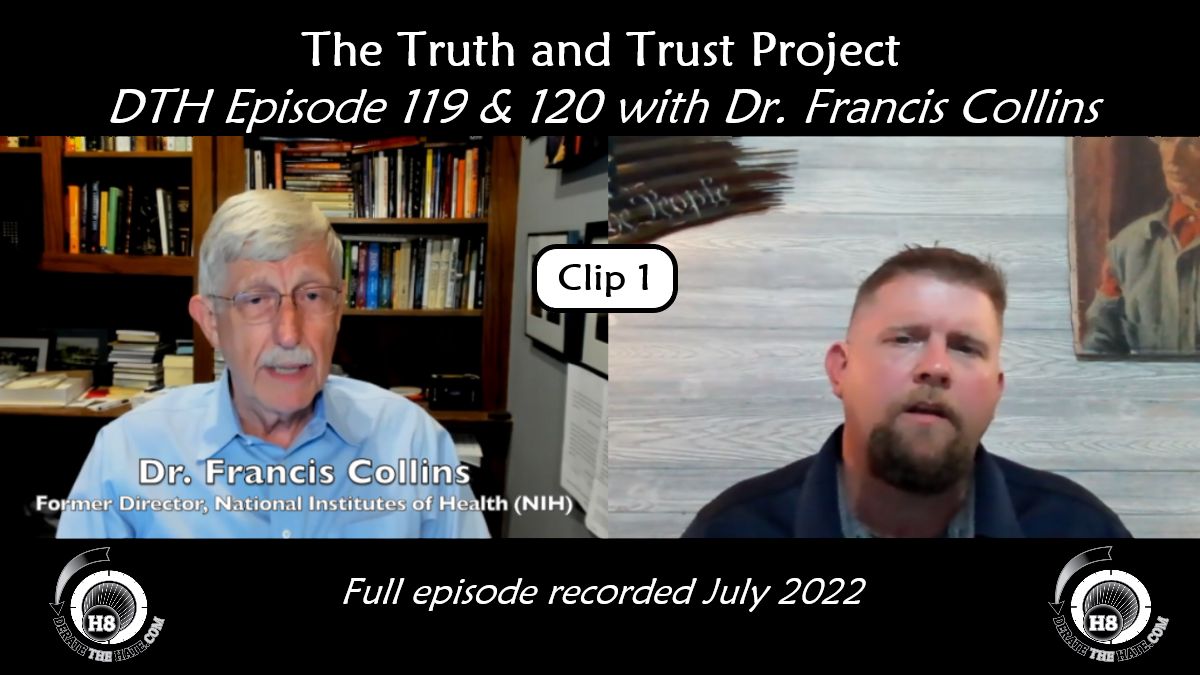
“The first several calls were about developing a friendship and learning about each other,” he said. “And then we started talking about the pandemic and how I felt a lot of what had happened was very wrong.” He shared stories about how he and other middle-class Americans were impacted by COVID policies.
“The biggest surprise was that he was genuinely open and wanted to know why people reacted the way they did,” Wilk said. “It was a huge blind spot for him, and one that I think genuinely hurt him, because I think his heart was telling him there were things that were missed, and he wished he could have done better.”
Throughout these conversations, Wilk was struck by the fact that—despite coming from two completely different backgrounds—he and Francis could actually understand one another. “Here I am, somebody who never graduated college, and I’m having real conversations about one of the biggest events of our lifetime with someone who actually steered a lot of what happened,” he said. “So it was very—I don’t know—surreal.”
“Here I am, somebody who never graduated college,
and I’m having real conversations about
one of the biggest events of our lifetime…”
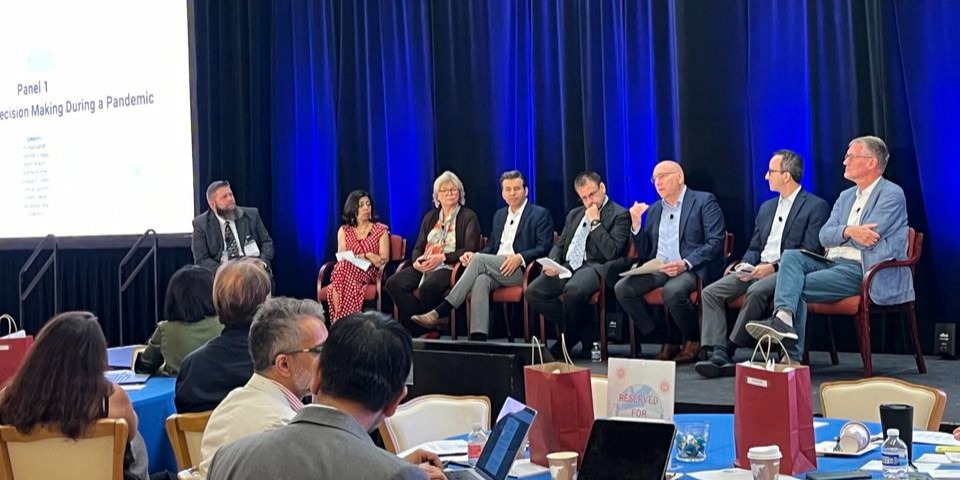
While Wilk built a relationship with Francis, he also sparked up a friendship with another giant in the public health space: Dr. Jay Bhattacharya, the current NIH Director who was adversarial to Francis during COVID. While Jay had spent most of his career looking up to Francis, he disagreed with him on pandemic policies and spoke out against them, most notably co-writing the Great Barrington Declaration, which criticized lockdowns.
In 2023, after years of working together on what they dubbed the Truth and Trust Project, Wilk and Francis spoke onstage about their findings at the Braver Angels Convention, which was livestreamed on YouTube. Jay watched along as Francis—one of the world’s most influential scientists—candidly expressed regret about how some aspects of COVID were handled. A few months later, the conversation went viral on social media.
“Right around New Year’s, I’m putting my daughter to bed, and I got my phone in my pocket, and all of a sudden it starts going off,” Wilk said. “It’s Jay Bhattacharya, and he’s like, ‘You better get ready because a handful of influencers on X just found out about you and Francis.’”
Clips of Francis talking about COVID quickly spread throughout social media with comments calling him “despicable,” “grotesque,” and “a genocidal criminal.” Several months later, Alex Jones, the far-right radio host, confronted Francis as he was boarding a flight, asking him: “How does it feel to kill more people than Hitler?” Alex continued shouting, “You’ll never get away with what you did,” as Francis moved forward in line.
“You better get ready because a handful of influencers on X just found out about you and Francis.”
A previous version of Wilk may have seen the blowback against Francis and amplified it, but now he advocates against this type of character assassination. “When I started with Braver Angels, I pulled off the us-versus-them shades, and started to see the world in a completely different way,” he said. “It absolutely changed my life.”
After spending years stuck in a state of conflict, Wilk has found himself in the peculiar position of being a bridge builder. “I’ve done almost everything in my life the hard way, and I’ve taken way too long to learn all these lessons,” he said. But “because of Braver Angels I’ve been able to accomplish things that nobody else on this planet’s been able to accomplish, like getting Jay and Francis together for a private meeting.”
As it turns out, the president of the dirtballs has a knack for bringing people together.
“When people are constantly thinking that their fellow human beings are just trash, and dehumanizing them, that’s a prison,” Wilk said. “I’m not in that prison anymore. And I thank God for it every day.”
.webp)


